AI scammers no longer need to hack your wallet if they can convince you to use it for them
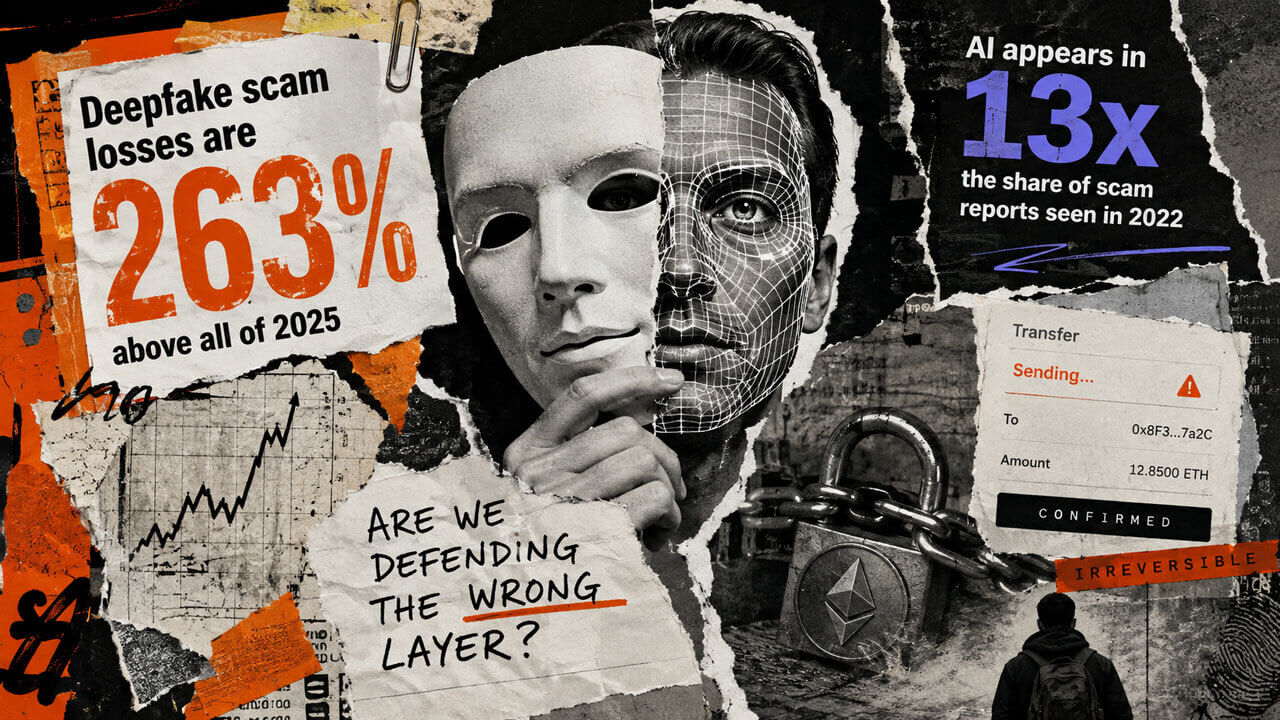
Reported losses from deepfake scams in 2026 have already exceeded last year's total by 263%, according to TRM Labs, highlighting a growing crypto security problem in which attackers increasingly manipulate authorized users rather than break blockchain code.
The blockchain intelligence firm’s new AI-in-Crime Adoption Index classifies scams as the only crypto-crime category where artificial intelligence has reached a “Mature” level of adoption.
TRM said reports involving scammer-side use of AI, including deepfakes, chatbots and AI-powered lures, have risen roughly 13-fold since 2022.
The shift exposes a weakness that traditional smart-contract security does not address. An exchange account can be properly authenticated, a hardware wallet can sign correctly, and a smart contract can execute exactly as programmed, yet funds can still reach an attacker if a deepfake convinces the person controlling those systems to approve the transaction.
That puts more of the security burden on the moment before authorization, when an exchange decides whether an account-recovery request is genuine, a treasury signer approves a transfer, or an individual accepts payment instructions from someone they believe they know.
… Continue reading the full article at the original source below.